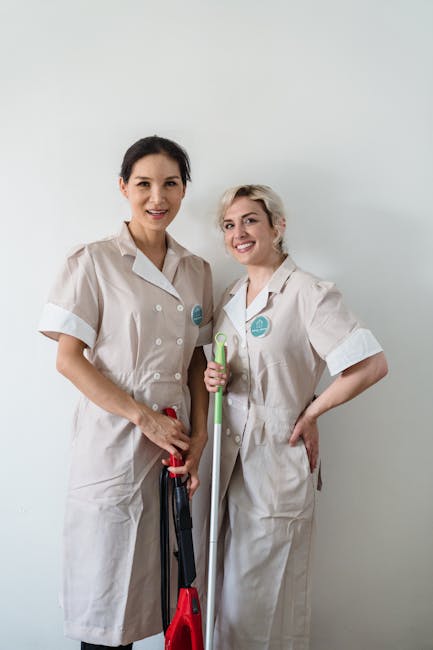
Licence and insurance checks for Islington professional cleaners
If you are hiring cleaners for a flat, office, or rental property in Islington, licence and insurance checks are not just a box-ticking exercise. They are the simple things that separate a safe, professional service from a risky one. In practice, they help you avoid awkward disputes, damaged property, and that sinking feeling when a job goes wrong and nobody wants to take responsibility.
This guide explains how licence and insurance checks for Islington professional cleaners work, what to ask for, what documents matter, and how to judge whether a cleaning company is actually set up to do the work properly. You will also see how these checks fit alongside service quality, contract terms, and everyday practical concerns like access, health and safety, and pricing. Let's face it, most people only think about insurance after something spills, breaks, or stains a carpet. Better to check first.
Why licence and insurance checks for Islington professional cleaners matters
There are two separate ideas here: licensing and insurance. People often bundle them together, but they do different jobs.
Licensing is about whether the cleaner or company is legally and operationally allowed to carry out the work they are advertising. Insurance is about what happens if things do not go to plan. In the cleaning world, the second one tends to matter most day to day, because even the best teams can have accidents. A vase gets nudged. A laptop cable catches a foot. A floor gets over-wet. These things happen.
In Islington, the real question is usually not, "Does this cleaner have a special cleaning licence?" because most routine domestic and commercial cleaning does not require a single universal cleaning licence in the UK. The better question is, "Can they prove they are legitimate, properly insured, and operating with sensible safeguards?" That includes checking whether they have the right public liability cover, whether staff are trained, and whether the company can explain how it handles risk.
For landlords, tenants, office managers, and homeowners, these checks protect more than money. They protect time, trust, and reputation. If a cleaner is working in a shared entrance, a managed block, or a busy office, the stakes are higher. And in a place like Islington, where properties can be compact, valuable, and full of hard-to-replace fixtures, a small mistake can become a very expensive one.
There is also the confidence factor. When a cleaner can speak clearly about their cover, their processes, and their limits, you tend to feel the difference straight away. The conversation gets calmer. More concrete. Less salesy. That alone is a good sign.
How licence and insurance checks for Islington professional cleaners works
A proper check is straightforward. You are not trying to become a compliance officer. You are simply confirming that the company is real, insured, and suitably set up for the type of cleaning you need.
Start with the business identity. Ask for the trading name, registered company details if they have them, and a clear contact route. Then ask what insurance they hold and whether it covers the specific service you want. A general domestic clean is one thing. After builders cleaning, gutter cleaning, or facade cleaning is another matter entirely.
Then there is the question of staff. Are cleaners employed, subcontracted, or a mix? There is no single perfect model, but you want clarity. A company that can explain who is entering your property, how they are supervised, and what happens if damage or loss occurs is usually far more reliable than one that gives vague answers.
For some services, there may be extra practical requirements rather than a formal licence. For example, a team offering exterior work, specialist equipment use, or heavy-duty cleaning around shared premises should be able to explain their safe working methods. For commercial settings, that often matters just as much as the certificate itself.
If you are comparing services such as domestic cleaning, office cleaning, or end of tenancy cleaning, the questions should be slightly different, but the principle stays the same: ask what is covered, who is responsible, and how the company manages risk on the ground.
And yes, ask for the paperwork before the first visit. Not after. Not "when you get a chance." Before. That one habit saves a lot of trouble.
Key benefits and practical advantages
Licence and insurance checks are not glamorous, but they are quietly useful. Here is what they give you in practical terms:
- Financial protection if accidental damage happens during a clean.
- Better accountability because legitimate companies are easier to trace and assess.
- Less disruption when a cleaner has a clear process for complaints, claims, and follow-up.
- Improved confidence for landlords, tenants, business owners, and managing agents.
- Reduced risk when specialist equipment, ladders, chemicals, or wet processes are involved.
- More professional communication overall, which is often a clue in itself.
A hidden benefit is standardisation. A cleaner who takes insurance and compliance seriously tends to take everything else seriously too: arrival times, access notes, protective sheets, chemical handling, and final checks. You notice it in the small details. Shoes off at the door. A quick walk-through before starting. Wiping down the handle they just touched. Nothing dramatic, just competence.
That matters most in services where problems can be less visible at first. A stain not fully treated. A floor that dries patchy. A sofa cleaned with the wrong product. If the company is well insured and well run, there is a much better chance that any issue is handled sensibly instead of becoming a long argument.
Who this is for and when it makes sense
Honestly, everyone hiring cleaners in Islington should care about this. But some people need to be extra careful.
Homeowners and tenants need checks because cleaners often work around valuables, pets, delicate surfaces, and personal items. If you are booking a one-off deep clean or moving out, you want to know exactly what happens if something is scratched or broken.
Landlords and letting agents need checks because timing is tight and expectations are high. A mistake between tenancies can delay handover, upset incoming occupants, or cause a dispute over deposits and condition reports.
Office managers and facilities teams need checks because commercial premises bring different risks: server rooms, reception areas, shared kitchens, and public access. A cleaner with appropriate cover and clear operating procedures is worth their weight in gold. Slightly old-fashioned phrase, but fair enough.
Block managers and resident associations should also pay attention when booking communal area cleaning or staircase maintenance. Shared spaces create shared liability, which is where even tiny oversights can become complicated.
Specialist-job customers need the most scrutiny. After builders cleaning, steam carpet cleaning, gutter cleaning, window cleaning, and facade work all introduce different levels of risk. If a provider can only speak in generic terms, that is a warning sign.
If you are simply booking a regular weekly clean, the process may feel less dramatic. Still, it is worth checking. A tidy invoice and a friendly smile are not a substitute for cover. Not even close.
Step-by-step guidance
Here is the most practical way to carry out licence and insurance checks without turning it into a project.
-
Confirm the exact service you need.
A company may be fine for regular cleaning but less suitable for specialist work like after builders or stain treatment. Be specific about the job, the surfaces, and any access issues. -
Ask whether any formal licence or registration applies.
Most cleaners will not need a general cleaning licence, but some jobs may involve waste handling, access equipment, or other regulated activity. Ask directly and listen carefully to the answer. A good provider will explain, not waffle. -
Request insurance details in writing.
Ask what type of insurance they hold, what it is intended to cover, and whether there are any exclusions. Public liability cover is the one people usually ask about first, but it is worth understanding the bigger picture too. -
Check the scope of cover against the job.
Cover that looks fine on paper may not suit your actual booking. For example, a carpet clean in a small flat is different from a full office clean or a job that includes specialist upholstery work. -
Review their written terms.
Good companies are usually open about service limits, customer responsibilities, and complaint handling. If you want a sense of how a provider sets these out, pages like terms and conditions and complaints procedure can help you understand the tone and structure to look for. -
Ask how they protect property during the visit.
Do they move furniture carefully? Do they use corner guards, mats, covers, or safe chemical dilution? The answer tells you a lot about how seriously they think. -
Keep a record of what was agreed.
Save the quote, cover details, and any special instructions. If you later need to make a claim or raise a concern, you will be glad you did.
A useful rule of thumb: if the company makes the paperwork easy, they probably make the work easier too. Not always, but often enough to matter.
Expert tips for better results
After a lot of cleaning bookings, one pattern keeps coming up: the best customers ask better questions. Not more questions. Better ones.
Try these:
- Ask what happens if damage is discovered after the cleaner has left.
- Ask whether the company has experience with your exact surface or item, such as a wool rug, wooden floor, or velvet sofa.
- Ask if the team understands building rules for your block or office, especially around access times and shared entrances.
- Ask whether insurance applies to subcontractors as well as employees. That one is often overlooked.
- Ask whether cleaning products are suitable for pets, children, or sensitive materials.
One small but telling habit: listen for clear boundaries. A confident cleaner will not promise the impossible. They may say a stain can be improved but not guaranteed to disappear. That honesty is a good sign, not a weak one.
If you are comparing property services, it can also help to look at adjacent pages such as deep cleaning, move-out cleaning, or one-off cleaning. The service itself may change, but the need for trustworthy cover does not.
And if a cleaner sends you a crisp, simple explanation rather than a wall of jargon, that usually means they know what they are doing. Fancy words are not a substitute for insurance. Thankfully.
Common mistakes to avoid
The most common mistake is assuming all cleaners are covered in the same way. They are not. One company may carry comprehensive public liability insurance; another may have limited cover with exclusions that do not suit your job.
Another mistake is focusing only on price. A low quote can be tempting, especially if the room is already messy and you just want it sorted. But if the company is uninsured, or the coverage is too narrow, you are taking on more risk yourself. Cheap can become expensive in one afternoon.
People also forget to match the insurance check to the job type. A cleaner may be perfectly fine for a standard home visit, but not the right fit for after builders cleaning, window cleaning, or gutter cleaning. Different tools, different risks, different expectations.
Another easy trap: not reading the exclusions. Insurance documents can be dry, sure, but exclusions are where the real story lives. If a provider refuses to discuss them at all, that is not a great sign.
Finally, some customers fail to mention fragile items, existing wear, or access restrictions. Then when something happens, nobody can agree what was already there. That's a nasty one. A few photos and a quick written note before the clean can prevent the whole mess.
Tools, resources and recommendations
You do not need a specialist toolkit to make a sensible decision. A phone, a notes app, and a little discipline are often enough.
- Quote comparison notes: keep track of the job scope, arrival window, and any exclusions.
- Photo record: take a few quick pictures of valuable or delicate areas before the clean.
- Document folder: store insurance details, written confirmations, and invoices together.
- Service page review: scan related pages such as insurance and safety and health and safety policy to understand how a company describes its standards.
- Pricing clarity: compare like with like using pricing and quotes, because a clearer quote often means a clearer service overall.
If you are hiring for a business premises, it can also help to review how the company communicates about commercial cleaning or office cleaning. The style of explanation matters. It is not just the words; it is the way they handle specifics.
For specialist care in the home, pages such as carpet cleaning, sofa cleaning, and upholstery cleaning are also useful to review. You get a better feel for whether the company understands the type of surfaces you need treated.
Law, compliance, standards and best practice
For most routine cleaning jobs in the UK, there is not one single universal licence that every cleaner must hold. That is why people sometimes get confused. The sensible approach is to think in terms of business legitimacy, insurance, safety, training, and fit for purpose.
In practice, good compliance usually means a cleaner or company can demonstrate:
- clear business identity and contact details;
- appropriate insurance for the work they do;
- safe working methods for staff and customers;
- clear pricing, terms, and complaint routes;
- respect for property, privacy, and access arrangements;
- proper handling of waste, chemicals, and specialist equipment where relevant.
That lines up neatly with general UK best practice for service businesses. It also sits alongside trust signals such as a clear about us page, a transparent privacy policy, and secure payments through payment and security.
For customers in managed blocks or shared spaces, there may also be building rules, landlord requirements, or site access procedures to follow. Those are not always legal requirements in the narrow sense, but they can still matter a great deal. In a busy Islington street, with loading restrictions, narrow stairwells, and residents coming and going, a well-organised cleaner makes life easier for everybody.
Expert summary: do not obsess over the word "licence" if the service does not call for one. Focus instead on proof of proper insurance, clear accountability, and evidence that the company works safely and professionally. That is the real filter.
Options, methods, or comparison table
When you are deciding how to vet a cleaner, you usually have three broad options. Each works differently.
| Approach | What it looks like | Strengths | Weak points |
|---|---|---|---|
| Quick verbal check | You ask a couple of questions over the phone. | Fast and easy for simple domestic jobs. | Easy to misunderstand, and hard to prove later. |
| Written confirmation by email | The company states what insurance they hold and what it covers. | Better clarity, easier to compare, useful record. | Takes a bit longer and depends on how clearly they write. |
| Full due diligence | You review insurance, terms, scope of work, and process details. | Best for landlords, offices, managed buildings, and specialist jobs. | More effort, probably more than you need for a tiny one-off task. |
For many homeowners, the written-confirmation route is the sweet spot. It is enough to feel confident without turning a simple booking into a paperwork marathon. For commercial clients, the full due diligence approach is usually worth it.
If your job involves specialist finishes, it may also help to compare service pages like hard floor cleaning, steam carpet cleaning, or stain removal. Those pages often signal whether the company can handle particular risk profiles and material types.
Case study or real-world example
Here is a realistic example from the kind of situation people run into all the time.
A landlord in Islington needs a flat cleaned between tenancies. The property has light beige carpets, a glass dining table, and a built-in oven that has seen better days. The first cleaner offers a very low quote and says, "Don't worry, we'll sort it." The second cleaner explains what is included, gives insurance details in writing, and says they can also handle the oven if the tenant has not already done so. The quote is slightly higher.
The landlord chooses the second cleaner. On the day, the team arrives with covers, separate cloths, and a clear plan for each room. Halfway through the job, a small issue comes up: a mark on the carpet that is older than expected. Because the company had already explained what could and could not be guaranteed, the conversation stays calm. The mark is treated, the result is acceptable, and nobody ends up arguing about promises that were never realistic.
That is what good licence and insurance checks are really buying you. Not just paperwork. Peace of mind. A sensible chain of responsibility. Less drama. And in property work, less drama is a proper luxury.
Truth be told, most good jobs are a bit boring in the best way. They start on time, they finish on time, and nobody has to chase anyone afterward. Beautiful.
Practical checklist
Use this checklist before you book:
- Have I confirmed the exact cleaning service I need?
- Have I asked whether any licence, registration, or special permission is relevant?
- Have I requested proof of insurance in writing?
- Do I understand what the insurance does and does not cover?
- Have I checked the company's terms, complaints process, and pricing structure?
- Have I mentioned any fragile items, pets, access issues, or building rules?
- Have I taken quick photos of existing wear or valuable items?
- Do I know who to contact if something goes wrong?
- Does the company explain its work in plain English?
- Does the overall service feel professional, consistent, and calm?
If you can tick most of those off, you are in a good place. If several are fuzzy, slow down and ask more questions. A bit of caution at the start saves a lot of grief later. Really, it does.
Conclusion
Licence and insurance checks for Islington professional cleaners are about more than proving a business exists. They help you judge whether a cleaning company is trustworthy, prepared, and suitable for the actual job in front of you. In a busy borough where homes, offices, and shared buildings all bring different risks, that matters a lot.
The best approach is simple: confirm the service, ask for insurance details in writing, read the terms, and look for clear answers. If the company speaks plainly, understands the job, and backs up its promises with proper cover, that is a strong sign you are dealing with the right sort of team.
And if you want the safest route, pair those checks with clear communication about the work itself, from domestic cleaning to specialist treatments. That way, the whole booking feels smoother, easier, and far less stressful. Which is the point, after all.
Get a free quote today and see how much you can save.
When the details are handled well, you get to enjoy the clean part without carrying the worry part.
Frequently Asked Questions
Do professional cleaners in Islington need a licence?
Usually, routine cleaning does not require a single universal cleaning licence in the UK. What you should check instead is whether the cleaner is a genuine business, whether they are insured, and whether the service matches the job you need.
What insurance should an Islington cleaner have?
Public liability insurance is the main one customers ask about, because it helps if accidental damage or injury is linked to the cleaner's work. Depending on the business, there may be other cover in place too, but the key is that it suits the actual service being offered.
Can I ask for proof of insurance before booking?
Yes, absolutely. In fact, you should. A professional company should be able to explain its cover clearly and provide confirmation in writing if needed.
Is cheaper cleaning usually less insured?
Not always, but a very low price can sometimes mean reduced cover, weaker procedures, or less experienced staff. Price alone should never be the deciding factor.
What if a cleaner damages something in my home?
If the cleaner is insured and the issue is covered, there should be a process for reporting and reviewing the damage. Keep photos, messages, and the booking record. That paper trail helps a lot.
Should I check insurance for one-off cleaning too?
Yes. A one-off job can still involve accidents, especially if it includes ovens, bathrooms, carpets, or delicate furniture. The risk may be small, but it is still worth checking.
Do landlords and letting agents need stricter checks?
Usually yes, because there is more at stake: property condition, timelines, and tenant handovers. A clearer paper trail is especially useful for end of tenancy work and similar bookings.
Are domestic and commercial cleaners checked in the same way?
The basic questions are similar, but commercial jobs often need a deeper review of cover, processes, and access arrangements. Offices, communal spaces, and managed buildings can create more complex risk.
What documents should I keep after booking?
Keep the quote, written confirmation, insurance details if provided, terms and conditions, and any messages about access or special instructions. If there is a dispute later, these documents matter.
How can I tell if a cleaner is professional before they arrive?
Look at how they communicate. Clear answers, written details, sensible questions about the property, and honest limits are all good signs. Vague replies and rushed promises are not.
Does insurance cover all types of cleaning damage?
No, not necessarily. Policies usually have limits and exclusions. That is why it is worth asking what the cover actually includes and whether it fits your specific job.
What is the best first step if I want to book safely?
Start by choosing the exact service you need, then ask the company about insurance, scope of work, and complaint handling. If you are unsure, compare the relevant service pages and get the details in writing before confirming.